
Bioripa Srl: From Waste to Resource for Soil Regeneration
Bioripa Srl: From Waste to Resource for Soil Regeneration
Bioripa Srl: From Waste to Resource for Soil Regeneration
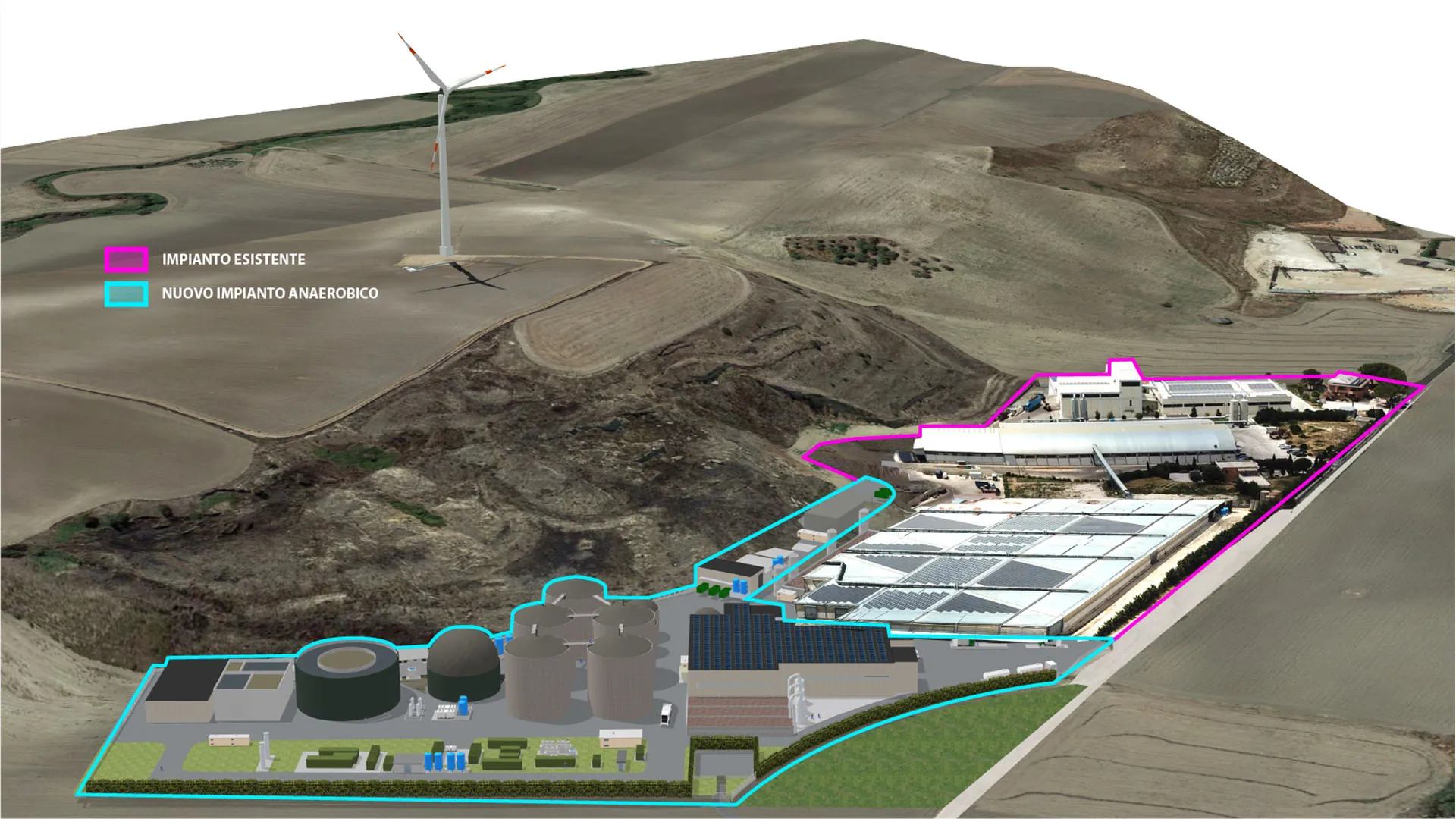
Bioripa Srl operates an aerobic composting plant located in Contrada Ripatetta, Lucera. The facility processes waste consisting primarily of the Organic Fraction of Municipal Solid Waste (OFMSW), sludge from civil wastewater treatment plants, and biodegradable waste (e.g., pruning residues). The final product of this composting cycle is a Sludge-based Compost Soil Improver (ACF), certified according to Legislative Decree 75/2010 and destined for local agricultural businesses.
Through the INTERESH project, production is entering an applied research phase. The goal, discussed with Eng. Silvestro Damiani (Monitoring and Control Manager) and Eng. Massimiliano Maddalena (Technical Director), is to demonstrate how Bioripa’s material can significantly enhance the agronomic characteristics of the soil.
The Industrial Cycle: Turning Waste into a Resource
The Bioripa composting plant (formerly Maia Rigenera) processes a mixture composed of approximately 60% OFMSW, 20% sewage sludge (EWC code 190805), and 20% pruning residues, which provide the necessary “structure” to the mass during processing.
The transformation process takes approximately 72 days. In the first stage, the mixture is kept in bio-cells for fifteen days under controlled aeration to facilitate accelerated bio-oxidation and reduce moisture to optimal levels. This is followed by eight weeks of “slow” maturation or bio-stabilization, during which the organic fraction completes its transformation into stable humus. A sensor network monitors temperature and air pressure in every bio-cell throughout the cycle. “Any thermal deviation is detected by remote alerts,” explains Eng. Maddalena. “The quality of the soil improver depends strictly on the precision of this phase.”
The INTERESH Experiment (EA3) and the Nitrate Issue
The INTERESH project was established to address progressive soil degradation, an emergency severely affecting the Puglia region. Among the issues tackled is the nitrate contamination of groundwater, a consequence of using chemical nitrogen fertilizers that crops cannot fully absorb. Rainwater washes these excess chemicals through the soil, eventually contaminating aquifers and waterways.
Bioripa’s compost operates differently: the natural nitrogen it contains is released slowly through mineralization by soil microorganisms. This reduces the risk of leaching while ensuring a gradual and constant nutrient supply for crops.
For the company, this marks its first participation in a European Union research project, providing an ideal opportunity to obtain scientific proof of the product’s efficacy. Through Experimental Action #3 (EA3), four areas in the Foggia province will be monitored to measure the bio-fertilizer’s real impact on microbial biodiversity and nutrient retention. “Participating in INTERESH,” adds Eng. Damiani, “allows us to move validation to the field, enabling us to collect data we do not yet possess.”
The collected data, managed according to FAIR protocols (to ensure traceability and transparency), will form the scientific foundation needed to certify the product’s technical superiority directly on-site.
Logistics and Market: The Pelletization Challenge
The distinctive value of Bioripa’s soil improver lies in an element that sets it apart from traditional solutions, which many local farms are still hesitant to abandon. “Our product has something others lack: humus,” explains Eng. Maddalena. “While raw livestock waste risks releasing nutrients in an uncontrolled manner, Bioripa’s humus regenerates the soil structure by anchoring the nitrogen.”
To make the product accessible to all types of farming operations, Bioripa may evaluate further processing methods following the experimental results, such as pelletization, to expand its market share.
“Pelletization is the key to a market breakthrough,” the Bioripa engineers conclude. The granular format is the vehicle that will allow the bio-fertilizer and its soil-protecting capabilities to be integrated into the daily workflows of every local agricultural business, potentially turning innovation into a standard practice.