Drought in 2026: agricultural losses and European initiatives for water management

Drought in 2026: agricultural losses and European initiatives for water management

The summer of 2026 put European agriculture under considerable strain, as low rainfall and repeated heatwaves affected production in numerous EU countries. According to assessments published in August by the European Commission’s Joint Research Centre, yield forecasts for summer crops were below the five-year average, with shortfalls of up to 14%, depending on the crop. Copernicus analyses also found that average surface soil moisture across Europe in August was substantially lower than in August 2022, when severe drought had already affected the continent.

The damage to crops was compounded by the speed at which drought conditions worsened during the season. In Italy, the analysis shows a sharp summer decline in the SPEI3 index, which measures the balance between precipitation and potential evapotranspiration. The comparison with 2003 and 2022 therefore highlights the rapid deterioration recorded in 2026: high temperatures increased evaporative demand and, without sufficient rainfall, accelerated the water deficit across agricultural areas.

In the province of Foggia, larger water reserves than in 2025 meant that the irrigation season began under more favourable conditions than the previous year. On 1 September, Lake Occhito, which supplies water to the area, held approximately 112 million cubic metres, almost 56 million more than on the same date in 2025. Since 31 July, however, the volume had fallen by approximately 36 million cubic metres, according to measurements by the Consorzio per la Bonifica della Capitanata. The improvement compared with the previous year must therefore be considered together with the summer decline in reserves, which reflects both weather conditions and water withdrawals.

The need to address water scarcity through long-term measures has also become central to European policy. With the adoption of the European Water Resilience Strategy in June 2025, the Commission established a programme of actions to protect the water cycle, improve water-use efficiency and ensure access to clean, affordable water. Reducing network leakage, restoring the capacity of landscapes to retain water and modernising infrastructure are among its areas of intervention, together with the overall objective of improving water efficiency by at least 10% by 2030.

To support the Strategy’s implementation, on 21 September 2026 the Commission launched the Water Resilience Stakeholder Platform, jointly with the European Economic and Social Committee and the European Committee of the Regions. With participation by business representatives, public authorities and civil society, the initiative aims to encourage discussion of the barriers that delay action and the solutions needed to improve efficiency, digitalisation and water reuse. The inaugural meeting of the European Water Academy took place on the same day. Through the Academy, the Commission aims to strengthen professional skills and preparedness for water crises.

In parallel with policy initiatives, several projects within the Mission Soil family address the relationship between drought, soil degradation and agricultural management. The capacity of soil to absorb and retain water also depends on its structure and organic matter content, whose preservation helps limit runoff and maintain water reserves available to plants during dry periods. The SpongeWorks project, for example, focuses on natural water retention through measures tested in three European river basins.

In the Mediterranean, MONALISA addresses practices to combat land degradation and desertification across six case studies. TERRASAFE develops innovations with local communities in five pilot areas vulnerable to desertification, where water scarcity is associated with environmental and socioeconomic problems.

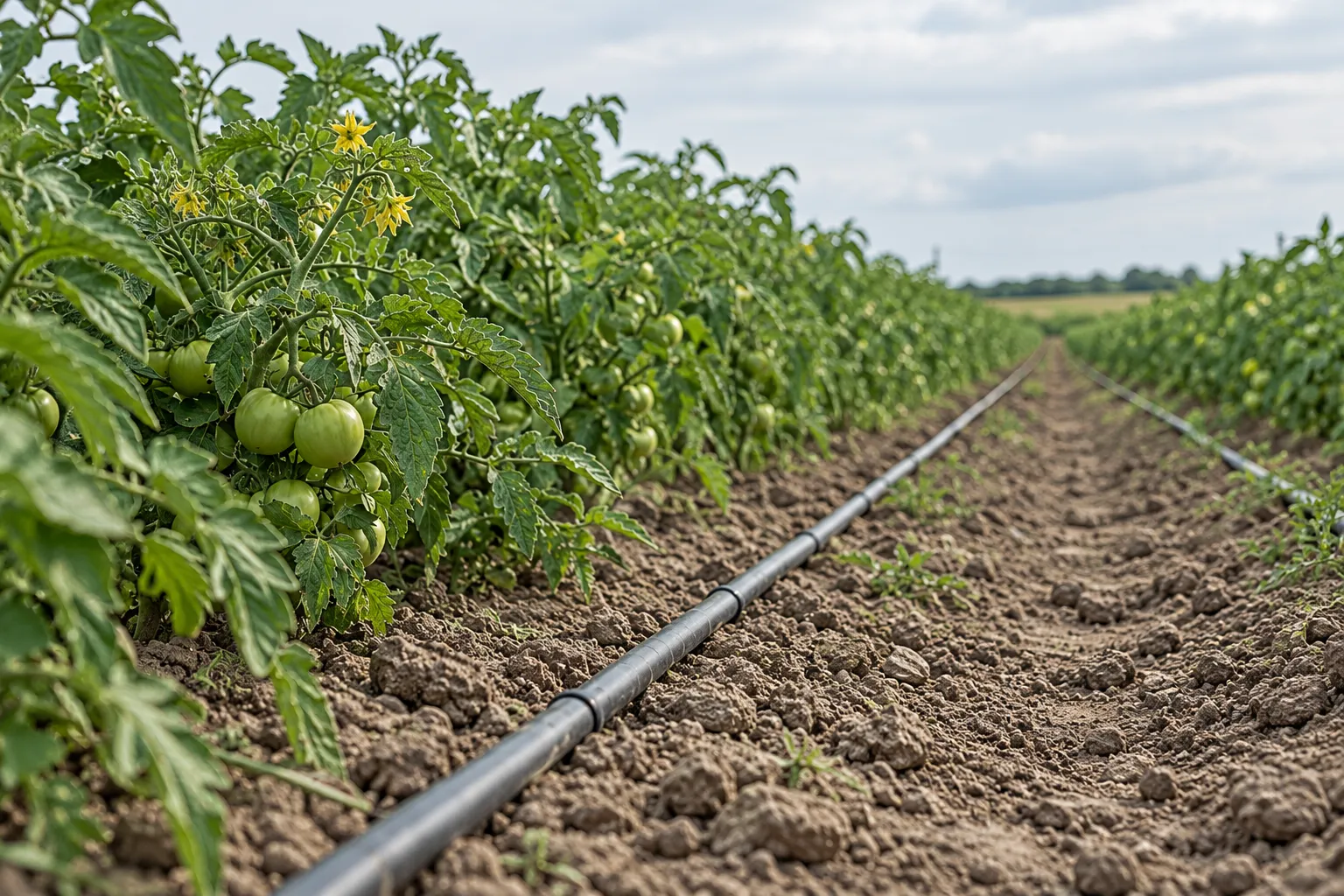
INTERESH also addresses water resource management through Experimental Action 2, an activity dedicated to precision fertigation under the scientific coordination of Ghent University, in collaboration with Dell’Aquila Farm in Lucera. The aim is to assess whether water and fertiliser applications tailored to soil properties can reduce inputs without compromising yields. For this purpose, soil sampling and analyses already completed have identified differences between field zones and provided the basis for maps that will guide variable-rate management.

The trial, scheduled for the 2027 growing season, will compare uniform and variable-rate fertigation through measurements of input use, yields and costs. The assessment will therefore examine potential reductions in water and fertiliser inputs relative to production, as well as the expenditure required to upgrade and operate the system.

Collaboration between research and agricultural businesses therefore plays a fundamental role in European agriculture’s capacity to respond to climate change, through the development of solutions that take account of production needs and the protection of natural resources. Supporting such collaboration means investing in the ability to continue farming under less favourable climatic conditions, with practices that are environmentally sustainable and economically viable for the businesses expected to adopt them.