
INTERESH celebrates the International Day of Rural Women
INTERESH celebrates the International Day of Rural Women
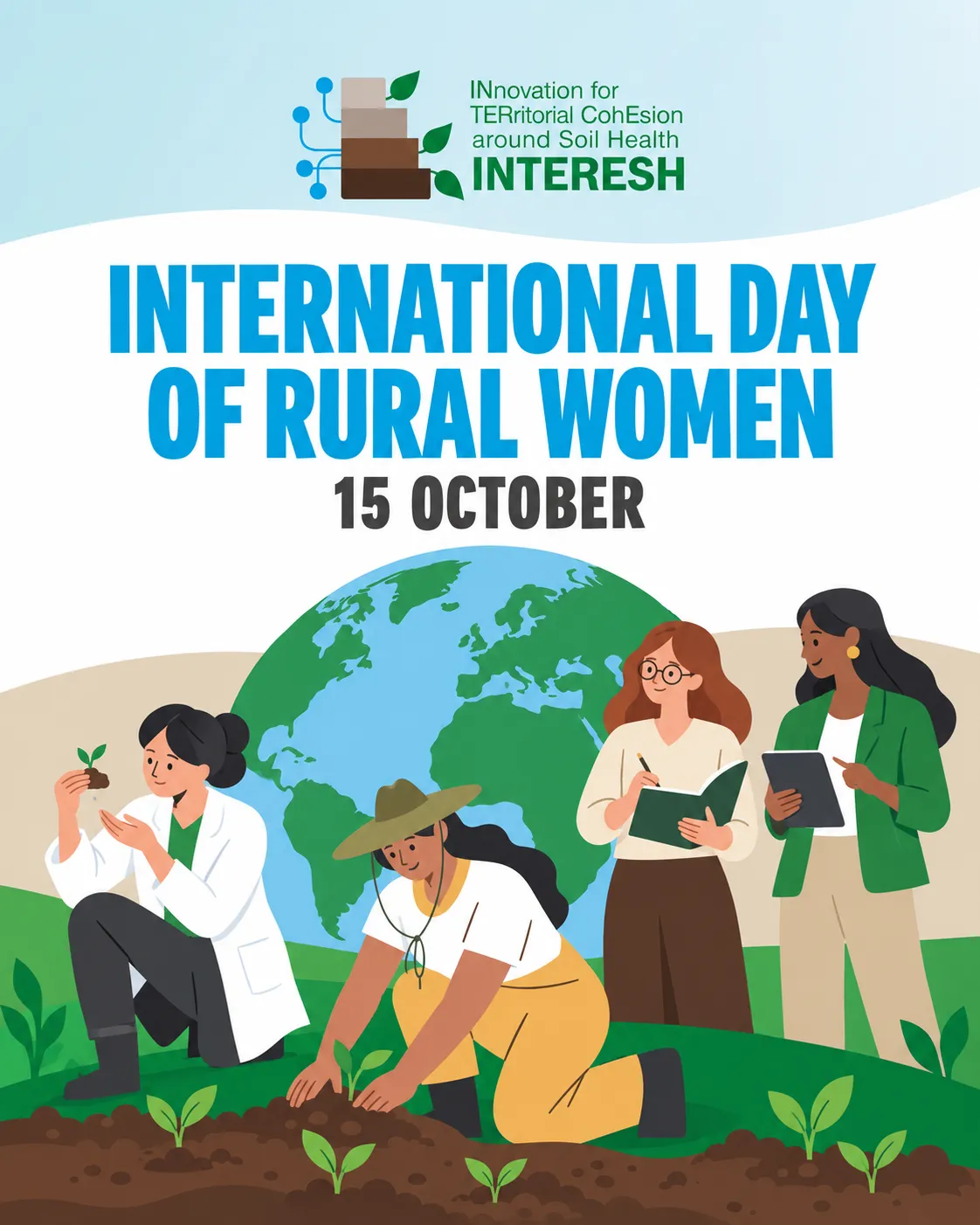
INTERESH celebrates the International Day of Rural Women
The International Day of Rural Women is observed on 15 October. Established by the United Nations in 2007, the day focuses on women’s work in agriculture, their contribution to food security and the inequalities that still limit their professional and economic opportunities.
Women’s work in farming and research
For a long time, women worked in the fields without the same opportunities as men to pursue education or hold scientific positions. Women established their place in agricultural research through careers like that of Eva Mameli Calvino, a botanist who became the first woman to direct the Botanical Garden of Cagliari in 1926, or Barbara McClintock, who discovered mobile genetic elements through her research on maize and received the Nobel Prize in Physiology or Medicine only in 1983, after years of limited recognition for her work.
Today, women run farms and work in technical advisory services and research, but still face professional and economic barriers. According to a recent FAO report, women in agrifood systems are more likely to have informal, insecure and poorly paid jobs. They face greater difficulties in obtaining finance, training and technical assistance, have fewer rights over land and fewer opportunities to take part in decisions. Unpaid family care adds to their workload.
Climate change deepens existing inequalities. The FAO report The Unjust Climate, published in 2024, analysed data from more than 109,000 households in 24 low- and middle-income countries. It found greater economic losses among rural households headed by women than among those headed by men.
2026 dedicated to women farmers
The United Nations General Assembly proclaimed 2026 the International Year of the Woman Farmer. FAO coordinates the international initiatives together with IFAD and the World Food Programme, with the aim of promoting reforms and investment to improve women’s conditions in agrifood systems. Governments are called on to ensure equal land ownership rights, better working conditions and greater opportunities to obtain credit, training and technical assistance.
The initiative is dedicated to women farmers, livestock keepers, agricultural workers, entrepreneurs and researchers, as well as women who work without owning land or having formal employment. FAO stresses that inequalities affect the entire food system. Its estimates suggest that closing gender gaps in agricultural productivity and wages could increase global GDP by around USD 1 trillion and reduce the number of people facing food insecurity by 45 million.
Women farmers in the European Union
According to the Commission’s report Women in farming in the EU, published in March 2026, women managed around 32% of EU farms in 2023. The proportion fell to 26% among farm managers under forty, while it reached 38% among new farmers. Farms managed by women were, however, smaller on average: data from 2020 show an average area of 9 hectares, compared with 21 hectares for farms managed by men. In Italy, the Agricultural Census recorded women at the head of 31.5% of farms in the same year.
On 8 March 2026, the European Commission launched the Women in Farming Platform, previously announced in its document on the future of agriculture and food. The platform offers women farmers valuable opportunities to exchange experiences and receive professional guidance.
The mentoring programme covers topics including farm finances, product marketing and the use of technology, through exchanges between experienced women farmers and women at the start of their careers.
Soil health and INTERESH
The European Mission A Soil Deal for Europe highlighted women farmers’ contribution to sustainable land management, biodiversity and climate change adaptation in an article published on 20 March 2026 to mark the International Year. The article calls for policies and investment to support their work.
INTERESH recognises women’s role in agricultural research and innovation and promotes their participation in trials and training. Female academics, researchers and professionals from the consortium make a substantial contribution to the project, alongside the women entrepreneurs whose farms host the field trials. Their participation is central to the project’s approach.
The Living Lab gives women farmers a space to speak directly with the people who develop new practices and technologies and propose problems to address. Their experience is essential to assess whether the proposed solutions meet production needs and can be applied on farms.
Alongside the trials, training will support participants’ professional development and provide useful knowledge for women who wish to start a business in the sector.
For more information about the European network, visit the Women in Farming Platform.